


The health benefits of spring cleaning and how to do it properly

A clean home is a healthy home. Spring cleaning has major benefits not only for physical health but also for mental health. With the arrival of spring comes the perfect opportunity to do the deep cleaning that not only refreshes the home but also improves quality of life. Find out how to do it correctly and how it can boost your health.
The difference between cleaning and disinfecting
An important first step in spring cleaning is the actual cleaning, which involves removing dirt (by vacuuming, dusting, washing). After the home is clean, the disinfection stage follows, essential for eliminating germs that can cause illness. Use biocidal products to disinfect surfaces and ensure a safe environment.
How to prepare for spring cleaning
- Plan: Make a detailed list of areas that need cleaning and estimate the time required for each task.
- Check products and equipment: Ensure you have the necessary products and equipment. If not, purchase what you are missing from our range of Klintensiv cleaning products.
- Involve the whole family: If you have children or a partner, divide the tasks to make the process easier and faster.

Step-by-step guide for every room in the house
Kitchen and pantry
Cleaning the kitchen is very important because it is where we prepare food, and dirty surfaces can contribute to cross-contamination and the spread of bacteria (E. coli, Salmonella, Campylobacter, Norovirus, or other pathogens).
Start with general tidying, wash the dishes, then clean from top to bottom: ceiling, light fixtures, walls, cabinets, countertops, and appliances. Don't forget the sink, the pipes underneath, the oven, and the range hood, where grease can harbor bacteria. Finally, wash the windows, doors, and floors.
Living room
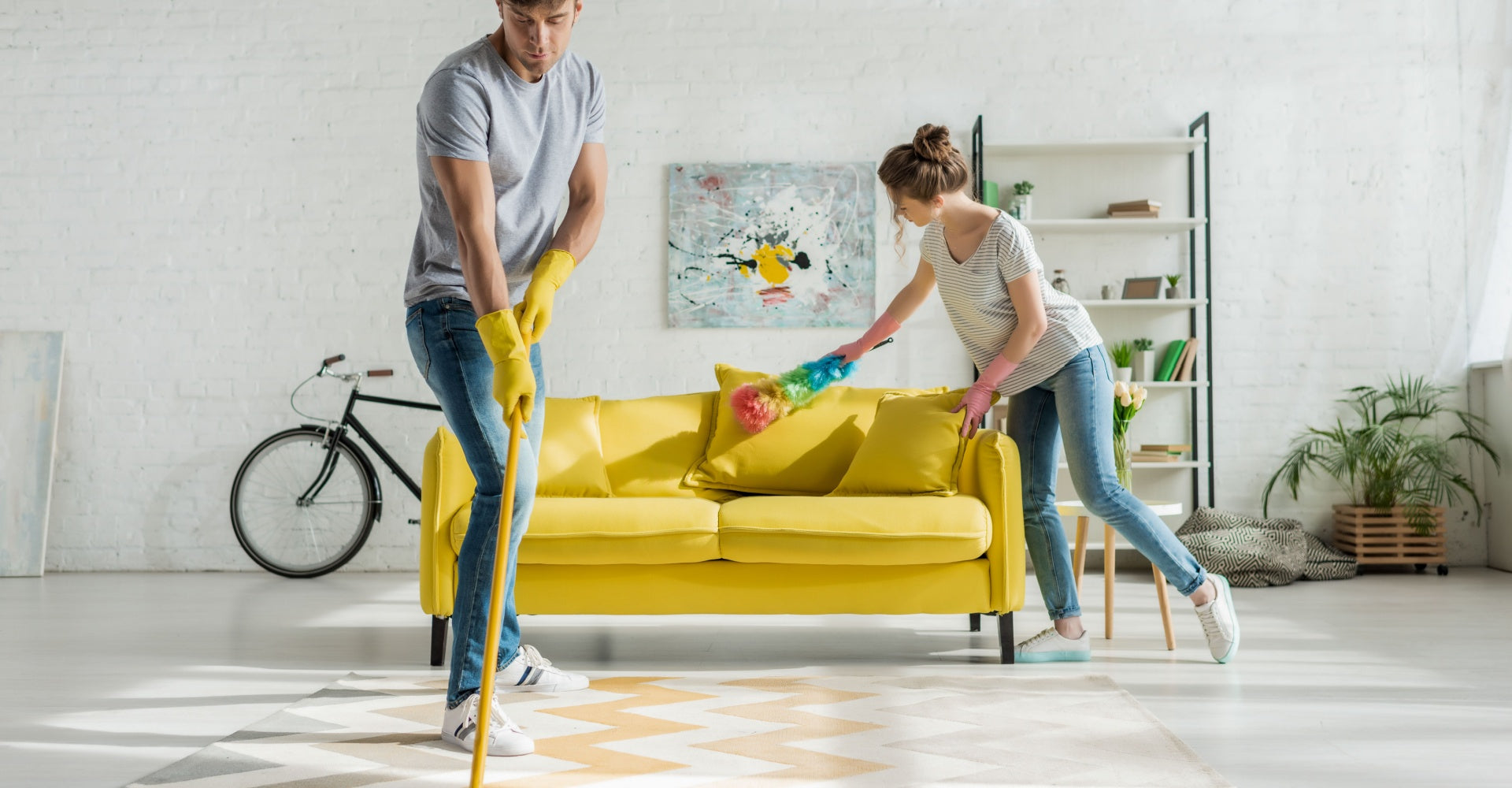
Cleaning the living room starts with the light fixtures and walls. Clean the carpets, curtains, and all textile surfaces that can harbor dust mites and mold. These can contribute to the onset of allergies, which is why it is essential to wash them frequently. Clean the windows and dust the furniture. If the air conditioner is located in the living room, it also needs to be cleaned. This will prevent allergens and pollutants from entering, while also helping the unit function at full capacity.
Bedroom
The bedroom is where we spend a lot of time, so a thorough cleaning is essential for our health. Clean the carpets, curtains, bedding, and dust everything. Also, swap your winter clothes for spring-summer ones, and if you have old clothing that you no longer wear, donate it. Finally, don't forget to wipe the floors.
Bathroom
The bathroom is the ideal place for the growth of bacteria and mold. Start with the ceiling, walls, tiles, and continue with the shower enclosure or tub, removing soap scum. Pay attention to the faucet; the shower head is an ideal place for bacteria, and mineral deposits can clog it. If you have a shower curtain, it should be washed and dried.
The sink, even if it looks clean, is a place that can harbor various pathogens. The E. Coli bacteria, responsible for gastric and urinary infections, can be found even 2 meters away from the toilet and in the sink, so be sure to clean and disinfect it properly (Abney, Bright, McKinney, Khalid Ijaz, & Gerba, 2021).
Wipe the mirror using a suitable solution for windows. Thoroughly clean the toilet bowl and seat. Chlorine-based products are recommended because they also remove limescale deposits, but you can also disinfect using a solution based on quaternary ammonium salts. Finally, wipe the furniture, tiles, and change the towels.
Don't forget to sanitize the washing machine. Detergent and limescale deposits combined with the damp environment can foster mold and bacteria. At the same time, a properly cleaned machine will function for a longer period of time.
Hallway, storage room, and balcony
In these rooms, first organize things, clean from top to bottom, dust, and clean the floors.
For each room, don't forget to clean and disinfect storage areas and frequently touched objects using products appropriate for the type of surface. Make sure to air out the rooms every time after you have cleaned, and if possible, use an air purifier in the house.
To keep the home clean and organized, make a daily habit of making the bed in the morning, washing dishes after every meal, putting clothes away in the closet (or not letting them stay in the laundry basket for too long), and putting used items back in their place every time. Thus, each time you begin cleaning, the process will be much faster.
Product recommendations for effective cleaning
Our cleaning products are formulated to facilitate the cleaning process. Except for floor products, we aimed to use a single type of fragrance, lemon, in the composition precisely to prevent possible allergic reactions. Citrus fragrances are known for their invigorating properties, playing an important role in increasing energy levels and mood while cleaning (Hertz et al., 2022). They also help mask unpleasant odors and drive away insects from the home.
Cleaning benefits for physical and mental health
According to clinical psychologist Dr. Dawn Potter, "people's energy can be much lower during the winter" (Potter, 2021), and with the arrival of spring, when days are warmer and brighter, people tend to want to get rid of the stagnant energy specific to the cold season.
Reducing stress and improving mood
According to a 9-year study of 60 women published in "Personality and Social Psychology Bulletin" (Saxbe & Repetti, 2010), a link was demonstrated between clutter and high levels of cortisol (the stress hormone), which can lead to fatigue, anxiety, and depression. Continuous stress can lead to the onset of obsessive-compulsive disorder related to cleaning, according to another study conducted at Masaryk University (Lang, Krátký, Jan, Shaver, John H., Jerotijević, Danijela, & Xygalatas, Dimitris, 2015), offering a temporary sense of calm.
Researchers at Florida State University conducted a study on 51 students and found that mindful dishwashing reduces stress and calms the mind. Those who were mindful, focusing on the smell of the soap, the warmth of the water, and so on, reported a 27% decrease in nervousness and a 25% increase in mental inspiration, unlike the group that washed dishes without focusing like the others. (Hanley, Warner, Dehili, Canto, & Garland, 2014).
During the cleaning process, as well as at its conclusion, endorphins and dopamine (happiness hormones) are released due to the physical effort expended and the sense of accomplishment (Dfarhud, Malmir, & Khanahmadi, 2014).
Increasing productivity and concentration
Spring cleaning reduces clutter, which helps increase concentration and productivity. According to a study conducted by researchers at the Princeton Neuroscience Institute (McMains & Kastner, 2011), clutter in the home has a negative influence on the brain, which can no longer process information quickly, and we can be easily distracted by our surroundings. When a room is crowded with items that are not useful, the brain puts in more effort to process the necessary information, according to a study published in "The Journal of Neuroscience" (Seidl, Peelen, & Kastner, 2012).
Improving sleep quality
A clean and tidy bedroom contributes to better sleep. A survey conducted by the National Sleep Foundation (***, -) found that there is a 19% greater chance of sleeping better when we make our beds in the morning and a 75% chance when the bed linens are freshly washed. Lack of sleep affects the ability to concentrate, think, learn, and remember (Yang et al., 2014), and can affect the immune system. Against a backdrop of fatigue, heart disease, diabetes, injuries, or even car accidents can occur.
Reducing the risk of allergies and respiratory problems
Dust, dust mites, pet dander, pollen, and other allergens found in homes on furniture, carpets, curtains, drapes, bedding, and other surfaces contribute to the onset of respiratory problems such as asthma, rhinitis, and allergic conjunctivitis, as well as contact dermatitis allergies. Cleaning these significantly reduces the risk of illness.
Preventing bacterial, viral, and fungal infections
Correct cleaning and disinfection of the home, using the right products, destroys the microorganisms responsible for the onset of infections. This is also especially necessary when one of the family members is sick, to prevent the spread of pathogenic germs.
Physical benefits: keeps us in shape and can contribute to improving our diet
Cleaning also involves considerable physical effort, which helps maintain good muscle tone and can contribute to burning calories, even preventing the onset of obesity. For example, if you weigh 57 kilograms, by washing dishes with moderate intensity or changing bed linens for 30 minutes, you will burn 187 calories, and if you vacuum carpets for 30 minutes, you will burn 103 calories. (Bernstein, 2023)
When we are in a crowded, unkempt environment, our stress level increases and we tend to consume unhealthy food, which leads to heart and circulatory system diseases, diabetes, or even cancer. If the home is clean and organized, the stress level is lower, and therefore we can focus on a healthier diet.
How to keep a clean and organized home in the long run
Spring cleaning is an opportunity for you to organize your things and sanitize all rooms. It is the ideal moment to refresh and revitalize every corner of your home, preparing it for the seasons to come. A clean home means not only a healthy environment but also a space that supports mental and physical health. Plan everything in advance and use the right products to make spring cleaning a pleasant and efficient activity.
Health begins with good cleaning, and that begins with Klintensiv. Between April 7-21, we are offering you a 25% discount on all cleaning products, so you can enjoy a clean and welcoming home without worrying about expenses.
Bibliography
***. (-). Sleep Foundation | Better Sleep for a Better You. Retrieved from https://www.sleepfoundation.org/
Abney, S., Bright, K., McKinney, J., Khalid Ijaz, M., & Gerba, C. (2021). Toilet hygiene—review and research needs. Journal of Applied Microbiology, 131(6), 2705–2714. Retrieved from https://academic.oup.com/jambio/article/131/6/2705/6716111
Bernstein, S. (2023). Calories Burned by Household Chores. Retrieved from webmd.com: https://www.webmd.com/fitness-exercise/ss/slideshow-calories-burned-by-household-chores
Dfarhud, D., Malmir, M., & Khanahmadi, M. (2014). Happiness & Health: The Biological Factors- Systematic Review Article. Iranian Journal of Public Health, 1468-1477. Retrieved from https://www.ncbi.nlm.nih.gov/pmc/articles/PMC4449495/
Hanley, A., Warner, A., Dehili, V., Canto, A., & Garland, E. (2014). Washing Dishes to Wash the Dishes: Brief Instruction in an Informal Mindfulness Practice. Retrieved from https://link.springer.com/article/10.1007/s12671-014-0360-9
Hertz, R., Larsson, M., Trujillo, R., Casola, M., Ahmed, F., Lipe, S., & Brashear, M. (2022). A three-factor benefits framework for understanding consumer preference for scented household products: psychological interactions and implications for future development. Cognitive Research: Principles and Implications. Retrieved from https://cognitiveresearchjournal.springeropen.com/articles/10.1186/s41235-022-00378-6
Lang, M., Krátký, Jan, Shaver, John H., Jerotijević, Danijela, & Xygalatas, Dimitris. (2015). Effects of Anxiety on Spontaneous Ritualized Behavior. Current Biology.
McMains, S., & Kastner, S. (2011). Interactions of top-down and bottom-up mechanisms in human visual cortex. Neuroscience Journal. Retrieved from https://www.jneurosci.org/content/32/34/11812
Potter, D. (2021). Retrieved from https://my.clevelandclinic.org/podcasts/health-essentials/decluttering-your-life-how-cleaning-and-mental-health-are-connected-with-dr-dawn-potter
Saxbe, D., & Repetti, R. (2010). No place like home: home tours correlate with daily patterns of mood and cortisol. Personality & Social Psychology Bulletin. Retrieved from https://pubmed.ncbi.nlm.nih.gov/19934011/
Seidl, K., Peelen, M., & Kastner, S. (2012). Neural Evidence for Distracter Suppression during Visual Search in Real-World Scenes. The Journal of Neuroscience. Retrieved from https://www.jneurosci.org/content/32/34/11812/tab-article-info
Yang, G., Wan Lai, C., Cichon, J., Ma, L., Li, W., & Gan, W.-B. (2014). Sleep promotes branch-specific formation of dendritic spines after learning. Science. Retrieved from https://pubmed.ncbi.nlm.nih.gov/24904169/
Photo source: Shutterstock, iStock


